1. INTRODUCTION2. AIM AND SCOPE3. BACKGROUND
3.1. Hunters and hunting in Europe
3.2. Hunting as pathway of introduction of alien species
3.3. Impacts of alien species introduced for hunting
3.4. The role of hunters in IAS surveillance and control
4. CONTEXT 4.1. The international context
Convention on Biological Diversity (CBD)
International Union for Conservation of Nature (IUCN) – Species
Survival Commission (SSC)
4.2. The European context
The Birds Directive
The Bern Convention
The EU strategy on Invasive Species
4.3. National initiatives
4.4. The European Hunter’s position statement
5. ACKNOWLEDGEMENTS 6. REFERENCESAPPENDICES
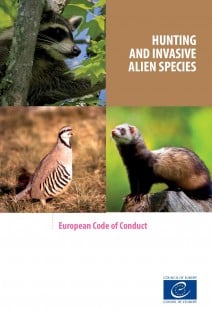
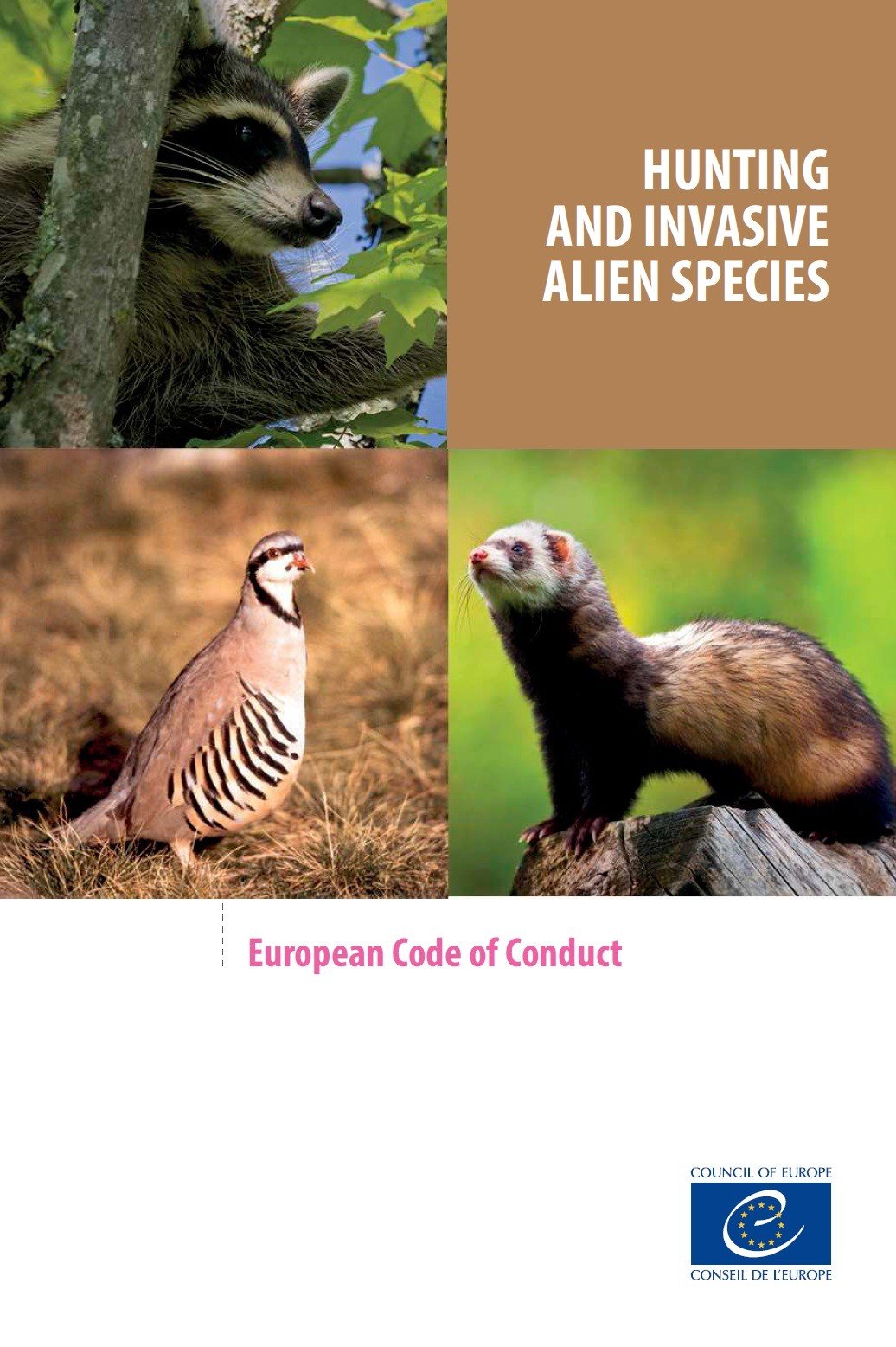
European Code of Conduct on Hunting and IAS
Aim and scope
Principles
1. Avoid intentional and unintentional releases of new invasive alien game species
2. Avoid intentional and unintentional introductions and spread of invasive alien plants for game food and shelter
3. Use alien species for restocking only if non-invasive or introduced in ancient historic times
4. Select sources for restocking from populations with appropriate genetic and disease management
5. Practice animal-aided hunting minimizing the risks of escapes and of impacting native species
6. Consider eradication and control as essential management tools to tackle IAS and support their implementation also when targeting
game species
7. Collaborate in monitoring and surveillance programmes on IAS
ANNEX 1: Relationship between the “European Code of Conduct on Hunting
and IAS” and the “European Charter on Hunting and Biodiversity”
NOTES