

What if freedom of expression had to be reimagined as our lives shift toward immersive realities?
Immersive technologies – virtual, augmented, and mixed reality (XR) – are transforming how people communicate, create, and interact. Their unique features of presence, immersion, and embodiment expand the possibilities for freedom of expression, but also introduce new risks to privacy, autonomy, dignity, and democratic participation.
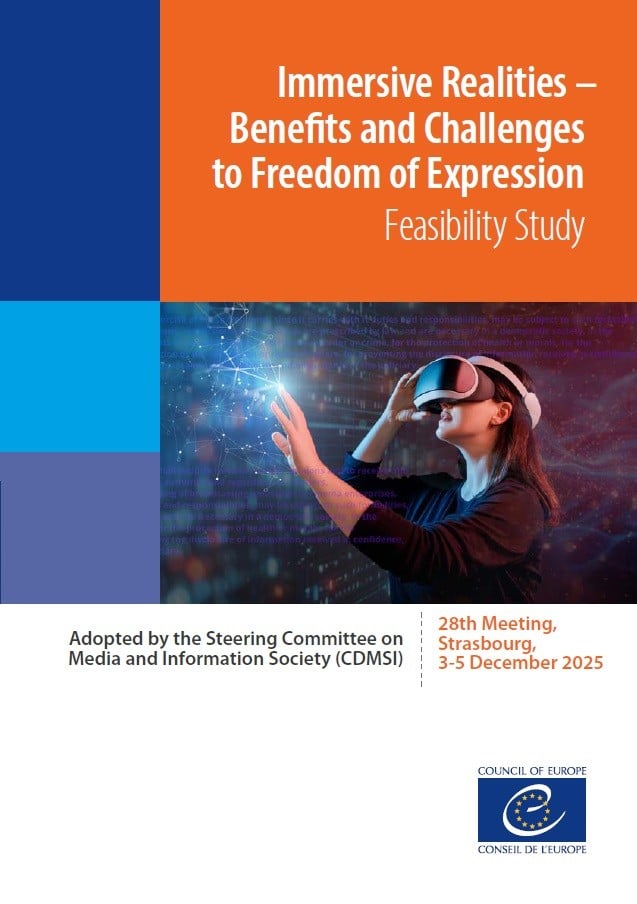
What if freedom of expression had to be reimagined as our lives shift toward immersive realities?
Immersive technologies – virtual, augmented, and mixed reality (XR) – are transforming how people communicate, create, and interact. Their unique features of presence, immersion, and embodiment expand the possibilities for freedom of expression, but also introduce new risks to privacy, autonomy, dignity, and democratic participation.