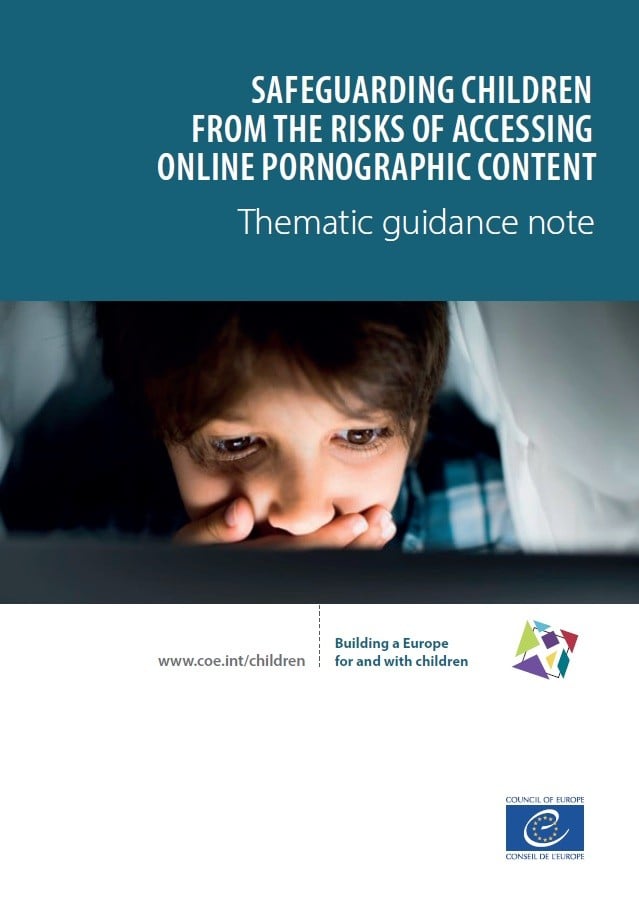
Inform anyone in contact with children on what can be done to better protect children from the risks associated with accessing pornographic content online.
Children are exposed to online pornographic content, both intentionally and unintentionally, enabled by the rise in digital and online technologies. This thematic Guidance Note, aims to enhance understanding of the harms associated with children’s exposure and access to online pornographic content. In doing so, it outlines the extent and means of exposure, the nature of the pornographic content that is freely and easily accessible to children online, and how ubiquitous access to that content is impacting on children. It provides guidance on key measures that can be taken to safeguard children from the risks associated with exposure to online pornographic content. Finally, it proposes an overview of the relevant legal, regulatory and policy context that can inform and support efforts to safeguard children from the risks associated with exposure to online pornography.
I. INTRODUCTION
1. SCOPE AND PURPOSE OF THE GUIDANCE NOTE
2. EXECUTIVE SUMMARY
3. DEFINITION OF PORNOGRAPHY
4. A NOTE ON THE SENSITIVITY OF THE ISSUES DISCUSSED IN THIS GUIDANCE NOTE
II. GENERAL CONTEXT: WHY IS THERE A NEED TO SAFEGUARD CHILDREN FROM PORNOGRAPHY?
1. CHILDREN’S EXPOSURE TO ONLINE PORNOGRAPHIC CONTENT
2. THE NATURE OF CONTEMPORARY PORNOGRAPHY
3. PORNOGRAPHY IS HARMING CHILDREN
III. GUIDANCE TO MEMBER STATES TO SAFEGUARD CHILDREN FROM THE RISKS OF ACCESSING ONLINE PORNOGRAPHIC CONTENT
1. THE IMPORTANCE OF MULTIPLE, COMPLEMENTARY MEASURES
1.1 Preventing and reducing children’s exposure to pornographic content
1.2 Minimising the risks and harms of exposure
2. SIX KEY MEASURES FOR IMPACTFUL ACTION
2.1 Provide proactive, coordinated, considered leadership
2.2 Establish an appropriate legislative and regulatory framework
2.3 Educate and equip parents and caregivers
2.4 Educate and equip professionals
2.5 Educate and support children
2.6 Support research and innovation
APPENDIX I: KEY NORMS AND STANDARDS RELEVANT TO THE ISSUE
1. UNITED NATIONS NORMS
2. COUNCIL OF EUROPE STANDARDS
3. THE EU FRAMEWORK APPLICABLE TO EU MEMBER STATES
APPENDIX II: BIBLIOGRAPHY